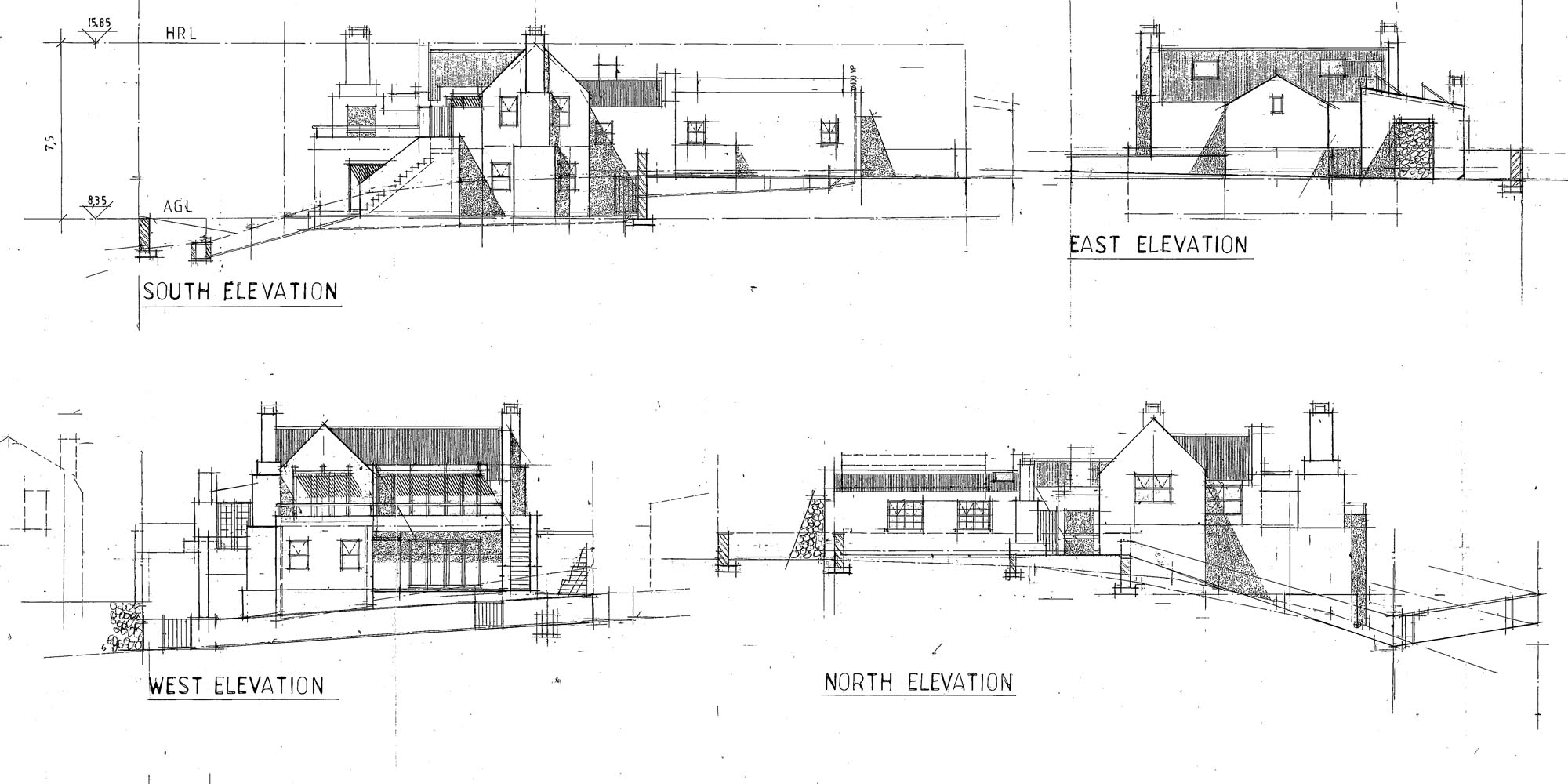
We designed the house, working with architect Jaco Visser who also helped ensure fidelity to the West Coast vernacular architectural style of Paternoster.
Walls are thick. Chimneys are stepped, large, numerous and full of character. Traditional plaster techniques, stone cladding on buttresses using local calcrete from the site.
Contemporary influences are evident on closer inspection: concrete floors and counter-tops, aluminium doors, skylights and windows, gabion retaining wall, spacious bathrooms with open showers.
Interior design: ours.
We conceived of the house being ‘green’, capable of being independent from the electricity grid and using few resources. Through the design process we made several decisions that made KwaThula highly efficient yet these meant that the investment required to go ‘off-grid’ was financially foolish: the savings would never pay back the cost. We do have approval to build solar photovoltaic panels on the roof of KwaThula Too, and as the costs of these continue to drop while efficiency increases, we intend to install them in the future. For now, with solar water heaters, LED lighting, wood burning fireplaces, induction and gas cooking, well-insulated roofs and walls, and tight-sealing aluminium doors and windows, the house uses very little electricity.
Water use is also low: dual-flush toilets, water-efficient shower heads, drip irrigation of indigenous plants in the garden. We investigated in detail options for both rain water harvesting and grey water systems, but the pattern of seasonal rainfall and the intermittent ‘holiday home’ use meant neither the practical nor financial aspects made sense.
We also considered the ’embedded energy’ in the construction of the house, using the Green Building Council of SA’s ‘EDGE’ tool for residential new construction. However, that tool was highly geared toward big city realities. For example, clay bricks have the least embedded energy of the materials we might have used, but they would have to come 2 hours up from Cape Town warehouses on big trucks (and the trucks go back 2 hours), putting their carbon footprint sky high. We found our focus becoming more on local benefit than energy efficiency, as the relatively isolated position of Paternoster meant anything coming from very far away had a lot of embedded energy in it thanks to the transportation required. So we used a great local builder (Didimala), used locally-made cement bricks sourcing raw materials from local area cement mines, had local tradesmen and craftsmen do the finishing work, and supported more traditional construction elements that are fading in the region, like reed ceilings.
We hoped to make both cottages wheelchair-friendly, but the realities of the site made that nearly impossible for the bigger cottage. It does have a wide front door and guest loo door, but the staircases up and down were unavoidable.
KwaThula Too, the smaller cottage, we did make as wheelchair friendly as we knew how. Working from the national standards we did our practical best but would not make full compliance. What does it offer? Firm, level entrance from the parking lot (park close to the pavers — there is gravel in the parking area), wide gates, minimal (2mm) lip to enter the front doors. Inside there is room to maneouvre under sinks (kitchen, bath), around the bed and in and out of the shower (roll-in). There is a steel and wood fold-down seat in the shower and grab bars in the shower and by the loo. The shower head is on a hose with adjustable height. We’ve kept items reachable in the kitchen for the most part, and instructed our cleaning services to move the few items on higher shelves down for guests who let us know. It’s a practical approach and one we expect to refine over time as we get more and more feedback from guests.
 KwaThula